Epilepsy

                     Epilepsy

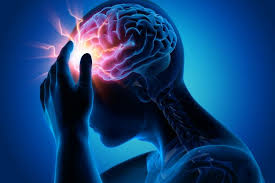
Epilepsy is a problem of the sensory system which is portrayed by the propensity of an individual to have seizures. Seizure alludes to the presence of indications (contingent on the sort of seizure) in an individual because of strange and unreasonable nerve cell movement in the cerebrum. The outcome is unusual conduct and sensations, including loss of awareness. There are an assortment of seizures with various side effects relying upon the piece of the mind in question. Homeopathy gives treatment to Seizures in the normal manner. The totally normal homeopathic solutions for epilepsy are totally protected and have no secondary effects. These cures are of extraordinary assistance in the treatment of Epilepsy.


Solutions for Epilepsy
Epilepsy can be treated with homeopathy which helps treat intense fits just as takes out the propensity to have seizures. A request is to be made in regards to the kind of seizure, emanation, setting off factors, tracking down different causes and individual prevailing manifestations in every single case. The aftereffects of the Homeopathy change for each situation relying on the term and kind of seizure.

1. Cicuta: Where there are Distortions of Body
Cicuta is perhaps the best medication for Epilepsy where the assaults of spasm are set apart by rough, twisted body shape. The contortions are generally horrible. There is available a stamped Opisthotonus — which alludes to the condition where the spine twists in reverse with the head and heels contacting the ground. The individual is absolutely oblivious. The face might be blue and the jaw seems locked. Cicuta is likewise one of the most amazing home grown solutions for epilepsy following head injury. Cicuta can be utilized for seizures happening in kids during dentition (advancement of teeth and their plan in the mouth), in ladies during and later conveyance and furthermore for spasms because of worms. Yet, the condition to be satisfied for utilizing this cure in these circumstances is the presence of savage body contortions. The setting off factors for utilizing Cicuta are contact and clamor. A hear-able quality might show its essence.

2. Artemisia Vulgaris: For Epilepsy with Petit Mal Seizure
Artemisia Vulgaris is the best normal medication to handle instances of Petit Mal Epilepsy. This cure is of incredible assistance for youngsters with Petit Mal seizures. The fundamental manifestation is continuous brief scenes of seizures in a brief time frame period. The setting off factor for the seizure is compelling feelings, including dread. Any abstract inclination prescient of the beginning of a seizure before an assault is missing (shortfall of air).

3. Stramonium: For Epileptic Convulsions Triggered by Bright Light
Stramonium is the most reasonable regular medication where the seizure emerges later openness to splendid light or sparkling items. The cognizance is safeguarded and jolting of muscles of the chest area part is capable by the patient.

4. Cuprum Met: When Aura for Seizure Attack is felt in Knees
Cuprum Met is the top medication when the seizure assault is gone before by an emanation in the knee. The manifestations set apart during the assault are clonic fit that normally starts in finger or toes and before long covers the whole body. Jolting of muscles is likewise taken note. The setting off factors for the assault incorporate dismay and outrage. In females, Cuprum Met is utilized for the treatment of spasm during pregnancy, later conveyance and around the feminine time frame.

5. Bufo Rana: For Epileptic Fit during Sleep
Bufo Rana is a characteristic medication of extraordinary assistance in giving a fix to Epilepsy seizures where the assaults are available during rest. The atmosphere is felt in the genital region. It additionally functions admirably for females who have assaults of seizures during menses.

6. Hyoscyamus: For Deep Sleep following Epileptic Attack
The best normal medication when profound rest follows an epileptic fit is Hyoscyamus. Different manifestations incorporate picking at bedclothes and playing with hands and strong jerking.


Kindle Unlimited Membership Plans Limbzest384.blog.com

Anticonvulsants


             Anticonvulsants

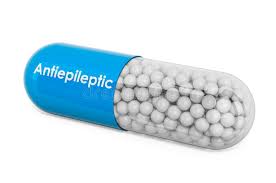
Anticonvulsants (all the more regularly referred to as antiepileptic drugs or as of late as antiseizure drugs) are a different gathering of pharmacological specialists utilized in the treatment of epileptic seizures.[1] Anticonvulsants are additionally progressively being utilized in the treatment of bipolar disorder[2][3] and marginal character disorder,[4] since many appear to go about as temperament stabilizers, and for the treatment of neuropathic pain.[5] Anticonvulsants stifle the over the top fast terminating of neurons during seizures.[6] Anticonvulsants likewise forestall the spread of the seizure inside the brain.[7]
Traditional antiepileptic medications might impede sodium channels or upgrade γ-aminobutyric corrosive (GABA) work. A few antiepileptic drugs have various or unsure instruments of action.[8] Next to the voltage-gated sodium channels and parts of the GABA framework, their objectives incorporate GABAA receptors, the GAT-1 GABA carrier, and GABA transaminase.[9] Additional objectives incorporate voltage-gated calcium channels, SV2A, and α2δ.[10][11] By hindering sodium or calcium channels, antiepileptic drugs diminish the arrival of excitatory glutamate, whose delivery is viewed as raised in epilepsy, yet in addition that of GABA.[12] This is most likely an aftereffect or even the real system of activity for some antiepileptic drugs, since GABA can itself, straightforwardly or by implication, act proconvulsively.Another expected objective of antiepileptic drugs is the peroxisome proliferator-initiated receptor alpha.

A few anticonvulsants have shown antiepileptogenic impacts in creature models of epilepsy.[20] That is, they either forestall the advancement of epilepsy or can end or opposite the movement of epilepsy. Nonetheless, no medication has been displayed in human preliminaries to forestall epileptogenesis (the advancement of epilepsy in a person in danger, for example, later a head injury).

Anticonvulsants are all the more precisely called antiepileptic drugs (truncated "AEDs"), and are frequently alluded to as antiseizure drugs since they give suggestive treatment just and have not been exhibited to adjust the direction of epilepsy
The typical technique for accomplishing endorsement for a medication is to show it is successful when looked at against fake treatment, or that it is more compelling than a current medication. In monotherapy (where just one medication is taken) it is thought of as exploitative by most to lead a preliminary with fake treatment on another medication of unsure adequacy. This is on the grounds that untreated epilepsy leaves the patient at critical danger of death. Hence, practically all new epilepsy drugs are at first supported distinctly as adjunctive (add-on) treatments. Patients whose epilepsy is presently uncontrolled by their medicine (i.e., it is headstrong to treatment) are chosen to check whether enhancing the prescription with the new medication prompts an improvement in seizure control. Any decrease in the recurrence of seizures is analyzed against a placebo.[21] The absence of predominance over existing treatment, joined with lacking fake treatment controlled preliminaries, implies that couple of present day drugs have procured FDA endorsement as starting monotherapy. Conversely, Europe just expects proportionality to existing medicines and has supported some more. Regardless of their absence of FDA endorsement, the American Academy of Neurology and the American Epilepsy Society actually suggest some of these new medications as beginning monotherapy.[21]
The benzodiazepines are a class of medications with entrancing, anxiolytic, anticonvulsive, amnestic and muscle relaxant properties. Benzodiazepines go about as a focal sensory system depressant. The general strength of every one of these properties in some random benzodiazepine shifts incredibly and impacts the signs for which it is endorsed. Long haul use can be dangerous because of the improvement of resilience to the anticonvulsant impacts and dependency.[28][29][30][31] Of the many medications in this class, a couple are utilized to treat epilepsy:

Clobazam (1979). Eminently utilized on a momentary premise around period in ladies with catamenial epilepsy.
Clonazepam (1974).
Clorazepate (1972).
The accompanying benzodiazepines are utilized to treat status epilepticus:

Diazepam (1963). Can be given rectally via prepared parental figures.
Midazolam (N/A). Progressively being utilized as an option in contrast to diazepam. This water-solvent medication is spurted into the side of the mouth yet not gulped. It is quickly consumed by the buccal mucosa.
Lorazepam (1972). Given by infusion in clinic.
Nitrazepam, temazepam, and particularly nimetazepam are amazing anticonvulsant specialists, but their utilization is uncommon because of an expanded occurrence of secondary effects and solid soothing and engine weakening properties.
Bromides.


Potassium bromide (1857). The most punctual compelling treatment for epilepsy. There would not be a superior medication until phenobarbital in 1912. It is as yet utilized as an anticonvulsant for canines and felines.
Carbamates
 Carbamate
Felbamate (1993). This successful anticonvulsant has had its utilization seriously limited because of uncommon however hazardous side effects.

Limbzest384.blog.com

Health And House Hold Vergali Fabric Booty Bands for Women Butt and Legs. Set of 4 Non Slip Cloth Resistance Working Out Band for Glute, Thigh, Squat with Workout Resistant Fitness Training Guide to Exercise at Home or Gym

Health And House Hold Vergali Fabric Booty Bands for Women Butt and Legs. Set of 4 Non Slip Cloth Resistance Working Out Band for Glute, Thigh, Squat with Workout Resistant Fitness Training Guide to Exercise at Home or Gym


About this item

  • latex
  • Perfect booty workout; get ready to strengthen your hip, thighs, and butt; these booty bands will give you the ultimate lower body workout that you have been looking for; just after a few sets of squats, lunges, and fire hydrants, you will be feeling the burn in no time; soon you will be turning your living room into a quarantine gym
  • Better comfort, better grip; stop using those latex rubber bands that pinch your skin; our bands are made with high quality fabric which makes your workouts way more comfortable; with non-slip elastic grips on the inside, you can now workout with bands that stay in place; no more worrying about your bands slipping, sliding, or rolling down your legs; wear them with tights or bare skin and avoid the hassle of having to readjust in the middle of a set
  • Exclusive training guide and workout videos included; access our training guide and working out videos online so you can get the proper technique for each leg and booty exercise; our training guide is easy to follow for any beginner and will enhance your workouts throughout the week so you will see immediate results
  • Four resistance strengths; we offer four exercise bands, each with different resistance levels and tensile strengths; build up your strength one band at a time starting with our light and medium bands, and work your way up to our more advanced heavy and heroic bands; each band is the same size and thickness so you can continue the same exercises as you progress through each strength
  • Lifetime manufacturer’s warrant; we are so confident that you will love our booty bands that we are offering all customers a lifetime manufacturer’s warranty. Our customer support team is here to help


Limbzest384.blog.com

Health And Household GalSports Exercise Ball (45cm-75cm), Yoga Ball Chair with Quick Pump, Stability Fitness Ball for Core Strength


Health And Household

GalSports Exercise Ball (45cm-75cm), Yoga Ball Chair with Quick Pump, Stability Fitness Ball for Core Strength


About this item

  • 🎄 BURST RESISTANT & SAFE DEFLATION - Our exercise ball is safety guaranteed with the honey comb structure, so even if you accidentally pierce the yoga ball, you will never fall to the ground immediately. This structure means the air would be released little by little, therefore, this anti-burst and slow deflation design makes the stability ball so much safer.
  • ⛄ Anti Slip Material- The non-slip lines offer this equipment more friction, which means you can not only practice at home or in the gym, but also in places like outdoors or open spaces where the ground conditions are tougher. And rather than invest in a large, expensive gym machine, going for a smaller and more economical option like the fitness ball is much wiser! Use it to enhance your flexibility, facilitate your stretching, and maintain the stability during your practice of Yoga or Pilates!
  • 🎁 Excellent Quality Material & Weight Capacity - Amazingly high weight capacity of 2,000 lbs. Professional GYM grade PVC: harmless to humans and pets alike, safely certified by SGS, BPA-free, latex-free and durable. Whether used as a pregnancy ball, a physio ball, a fun bouncy ball for your kids, or a professional ball for physical therapy, it would never fail you! Enjoy the soft and comfortably elastic texture as you press it down.
  • 🎈 Sitting Posture Correction& Massage: This inflatable balance ball can be effectively served as a multifunctional Office Ball Chair. It constantly reminds you of a good sitting posture as your various body parts actively make subtle adjustments to stay in balance, which makes you automatically sit up nice and straight, increasing overall blood circulation. The soft PVC surface produces a massaging effect to alleviate your fatigue while working in front of the desk.
  • 🎅 EASY TO INFLATE – Conveniently inflatable, comes with a quick inflation foot pump, a plug remover, a measuring tape, 2 air stoppers, and detailed instructions. Available in 4 sizes: 45cm, 55cm, 65cm, and 75cm to cater to your specific needs. Make the purchase decision based on your individual height. Also make sure you can comfortably hold the gym ball of the size chosen with your hands and squeeze it in between your feet conveniently if these moves will be often practiced.


Limbzest384.blog.com

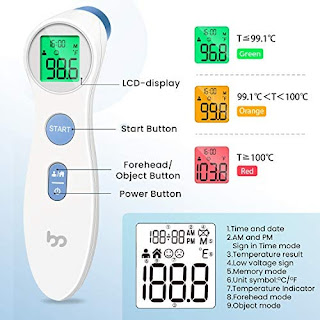
Health and House Hold,Touchless Forehead Thermometer for Adults and Kids, Digital Infrared Thermometer for Home with Fever Indicator, Instant Accurate Reading

Health and House Hold,Touchless Forehead Thermometer for Adults and Kids, Digital Infrared Thermometer for Home with Fever Indicator, Instant Accurate Reading


Touchless thermometer for adults, kids and the elderly!

femometer infrared forehead thermometer is specifically designed for easily use on the forehead.

femometer forehead thermometer is intended for the intermittent measurement of human body temperature from the forehead by people of all ages. When properly used, it will quickly assess your temperature in an accurate manner.

It has forehead mode and object Mode.You can also use object mode to measure the temperature of a room or object.

It will be a great edition to your home medicine chest!


Features & details

  • Essential item for fever monitoring: Femometer infrared thermometer is a ideal for adults, kids and elders. It's accuracy and easy to use, which is a great gift for yourself or someone you care about.
  • No Contact Thermometer: The infrared thermometer will get the temperature reading without body or object contact. Move the thermometer close to the forehead and press the button, you will get the accurate temperature readings.
  • Fever Alarm: There are 3 colors display on the LCD screen for different temperature level. With clear large LCD Screen Display, it allows you easy to read day and night. ℉ and ℃ are easily switchable.
  • Dual mode:The infrared thermometer can measure both human body temperature and object temperature. It can record 10 sets of data.
  • What You Get:1 Infrared Thermometer, 1 Operating Manual,1 Quick Start Guide, 2 AAA batteries(LR03)

Limbzest384.blog.com

HOW TO PRESCRIBE PRISM GLASSES

 Prescribing Prism

Both phorias and tropias can be accurately measured using prism and cover tests. Initially a cover test is performed to determine the fixing eye and estimate the deviation. This is followed by the prism and alternating cover test, with adjustment of prism strength until refixation movement of the eyes is neutralized.

Phorias

Although most normal individuals have at least some phoria, the vast majority are asymptomatic. If a deviation is uncovered on routine testing in an asymptomatic patient, no treatment is necessary. If a patient is complaining of asthenopia and a deviation is discovered during testing, one must first ensure that there are no coexisting issues prior to attributing the symptoms to a phoria. There are a number of causes for asthenopic symptoms that should be ruled out. Some of these causes are summarized in Table 1. To be sure, some of the refractive causes of asthenopia are via induced phorias.

Once other causes for symptoms are ruled out, phorias should be investigated, and, in certain cases, may benefit from partial prism correction. One indication that the patient will benefit from prisms is minimal prism adaptation during a 15- to 20-minute trial with prisms in the waiting area. Otherwise, if there is a significant adaptation to the prisms, the patient’s symptoms will probably not be improved through the use of prisms, and other therapies, including surgery, should be considered.

Esophoria

As soon as the cover/uncover test identifies an esophoria, the next step is to obtain an accurate cycloplegic refraction because many cases of esophoria are “accommodative,” due to uncorrected or undercorrected hyperopia. It is wise to perform the cover/uncover test for esophoria at both distance and near, for the deviation may be larger at one distance than the other.

After refracting the patient and ensuring that there is no uncorrected hyperopia, one may wish to try a small amount of plus sphere to decrease the accommodative demand, as some cases of esophoria are due to accommodative excess. Such intervention is often enough to treat the condition, but base-out prism may be necessary if refractive methods fail. In situations that require the use of prisms, base-out prism should be prescribed with only the minimum amount of power required to eliminate the symptoms.

Exophoria

Again, careful refraction of the patient can help the management of many cases of exophoria. With refractive correction in place, if any, cover tests should be performed, and accommodation should be evaluated by push-up measurement of accommodative amplitude, or, especially in children, by dynamic retinoscopy. Divergence excess (in contrast to convergence insufficiency) manifests as an increased angle of exophoria in the distance.

In exophoria, correcting both myopia and hyperopia can help improve symptoms, but additional cautions should be taken when correcting hyperopia, as full correction of hyperopia may worsen the symptoms. A several-minute test with hyperopic correction should be attempted to see if exophoric symptoms improve because of clearer imagery or worsen by relaxing accommodation. If they worsen, prescribe the largest correction possible to treat the hyperopia while avoiding exophoric symptoms. A good starting point is one-third of the spherical error. Just as plus lenses can be helpful for esophoria, decreased-power plus lenses or even minus lenses can improve exophoria.

Base-in prisms may also be helpful for the treatment of exophoria. As with esophoria, the least amount of prism that eliminates exophoric symptoms should be used. The cover test should provide an estimate of the power of the prism to be used. Additionally, treating a minor hyperphoria with vertical prisms can allow the patient to compensate for exophoria with no need for horizontal prisms (see below). If divergence excess is found to be the cause of the exophoria, prisms should be avoided. In this situation, base-in prism can cause esophoria at near, which patients do not tolerate well.

Hyperphoria

Both the measurement and treatment for hyperphoria are similar to those for the horizontal heterophorias. One important point regarding hyperphorias is that they often coexist with horizontal heterophorias, and the treatment of one may improve or eliminate the other condition. Therefore if either a horizontal heterophoria or a vertical heterophoria is found, it is important to investigate whether the other is present. Initial attempts at treatment should be focused on the primary phoria with the intention of treating both.

Tropias

various types of tropias can be categorized in a number of ways. Broadly, they can be considered as comitant or incomitant. Surgery is generally the preferred treatment for tropias unless there is a reason not to perform surgery (see above). Therefore prisms for tropias are generally used as a temporizing measure until surgery can be performed.

In general, the measurement and treatment of tropias parallel those of phorias, as discussed above. A 30- to 45-minute patch test can be especially useful in uncovering the full deviation. When measuring incomitant deviations with prisms with each eye “fixing,” it is imperative to switch the prism to always be before the non-fixing eye. Otherwise the “fixing” eye behind the prism will not truly be looking in the intended direction, and major measurement errors can occur. For comitant strabismus, a prism adaptation test can be helpful to help determine treatment. For incomitant strabismus, prisms may be helpful to move an area of single vision to straight ahead.

Anisometropia

Often when patients with anisometropia receive a new pair of glasses, they will complain of double vision, particularly while reading. This double vision is due to the differential prismatic effects of the two lenses when the patient is looking off-center as when reading (as per Prentice’s Rule). In order to improve reading vision, vertical prism can be incorporated into the lower portion of one lens or the other to help compensate for the differential vertical prismatic effect and lessen or eliminate the double vision. These prisms are referred to as slab-off or reverse-slab prisms. The slab-off prism is placed on the more minus or less plus lens, more commonly on glass lenses, and in effect takes away base-down prism (adds base-up prism). The reverse-slab prism is placed on the more plus or less minus lens, most commonly on molded plastic lenses, and adds base-down prism.

Rather than a calculation of the amount of slab-off or reverse-slab prism to prescribe, trial-and-error measurements are preferred because one does not know how much the patient has already compensated to previous anisometropic glasses. Increasing the amount of prism handheld over the lower portion of one lens of the anisometropic correction until the patient can read comfortably is the most reliable way to determine the amount of slab-off or reverse-slab prism to prescribe. Up to 4 to 6 of slab-off or reverse-slab effect can be obtained when needed.

 Pitfalls in Measuring Deviations

When prisms are used to measure a strabismic deviation in a patient, several easily avoidable mistakes are commonly made.

Positioning

The position in which the prism is held can be critical when measuring a patient’s deviation. There are three intended positions for holding prisms: the Prentice position, the minimum deviation position, and the frontal plane position . Glass prisms are calibrated for the Prentice position and should be held in this manner when making measurements. Plastic prisms, including plastic prism bars, are generally calibrated for the minimum deviation position. As it is difficult to estimate accurately the minimum deviation position, the frontal plane position is a good approximation when using plastic prisms.

Adding Prisms

Stacking two prisms in the same direction, especially if one is of high power, can also lead to errors because of the same positioning issues mentioned above. If the two prisms are held in contact with each other, even if the first prism is held in the correct position, the second prism will not be in the correct position in relation to the light leaving the first prism. This will create a stronger prism effect than the sum of the two prisms, leading to a falsely low measurement. If the sum of the two prisms is prescribed, or surgery is based on the prism measurement, the patient will be left undercorrected. It is difficult to estimate accurately the correct position of the second prism in relation to the first, and it is therefore more accurate to simply stack the prisms together and use a conversion table to add their true effects.

Splitting Prisms Between the  Eyes

One might assume that one way to avoid the difficulties of stacking two prisms is to split the prisms between the two eyes and add the powers together. Although this may work for low prism powers, it becomes increasingly inaccurate with increasing prism power. Splitting prisms is preferred over stacking two prisms together in the same direction before one eye, but again using a table of summed prism values is preferred to avoid errors.

Method for Calculating Oblique Prism

There is a simple method to calculate oblique prism from combining a horizontal prism with a vertical prism that does not require trigonometric calculations and requires only a piece of paper, a ruler, a pen or pencil, and the protractor on a phoropter or trial frame.

First, sketch the vector addition of the two prism powers on polar coordinates to determine the approximate angle for the base direction of the oblique prism. Up is base-up, and right is base-in or base-out depending on which eye the prism is intended for.

Then measure off the number of prism diopters of the two component prisms on two adjacent edges of a piece of paper. (One can use any unit for this measurement, but the unit must be consistent. For example, if you have two prisms, one of 3 and the second 2, measure off 3 cm/inches/etc on one edge and 2 cm/inches/etc on the other edge). Connect the two measurement marks with a line, forming a triangle. Now measure the length of the connecting line you just drew, the hypotenuse of the triangle. This will give you the number of prism diopters for your oblique prism.

Then fold the paper along the hypotenuse, identify the acute angle of the triangle that you estimated using your polar coordinate plot, and measure this angle using the protractor on the phoropter or trial frame, giving you the base direction of the oblique prism.

Uncommon but Important Uses for Prisms Childhood Cranial Nerve Palsies (Third, Fourth, and Sixth Cranial Nerves)

For children with cranial nerve palsies, early treatment is important to prevent amblyopia. Prisms may be used for small, reasonably comitant deviations in order to maintain binocular function. A test with temporary plastic Fresnel prisms is recommended prior to grinding prisms into the child’s lenses. Treatment of a recognized underlying cause is essential, and if prism therapy fails, surgery should be considered.

Prisms for Enhancing Communication

For patients with no useful vision in the deviated eye, prisms can be extremely helpful in improving the appearance of the eyes and facilitating the patients’ communication and interaction with others by alleviating difficulties with eye contact. A prism held opposite the direction of a correcting prism can improve the apparent alignment of the eyes (ie, base-in for esotropia and base-out for exotropia). Expect approximately 1 mm of apparent eye shift for every 8 of prism power.

Homonymous hemianopia

Prisms (or mirrors) may be used in patients with homonymous hemianopia to bring images from an area within the visual field defect into the area with retained vision. Although this may be useful on occasion, generally very high prism powers are required, which can create cosmetic problems as well as a confusing visual environment in which objects may appear and disappear from view unexpectedly.

Hemispatial neglect

Patients who experience right hemisphere strokes often experience left hemispatial neglect. Recent studies have shown that yoked prisms which move both visual fields to the opposite side (to the right) improve function in these patients. The mechanism for this improvement is believed to be that in order to compensate for the shifted binocular visual field, the patient must remap his  sensorimotor coordinates leftward, and this has been shown to improve function on the neglected left side.

Nystagmus with head turn

Patients with a head turn to compensate for nystagmus can benefit from yoked prisms, but just as with patients with homonymous hemianopia, they will often require very high prism powers which may lead to decrease in visual acuity (especially with Fresnel prisms), chromatic aberration, heavy lenses, and cosmetic problems, as well as the visual disturbances described above. In spite of these problems, prescription of bilateral yoked prisms, with base in the same direction as the head turn, can keep the patient’s eyes in an eccentric null position while lessening the head turn.

Save 40.0% on select products from FooAeetom with promo code 40MWVYNE, through 5/15 while supplies last.Save 50% on select product(s) with promo code 50BQ4F6V on Amazon.com